

Author: Priya Mehta, Small Business and Tech Writer
I want to start with a confession. When AI tools started becoming a big deal a couple of years ago, I was genuinely skeptical. I ran a small content and consulting business, and every time someone told me AI was going to “transform everything,” I rolled my eyes a little. It felt like hype. Like someone trying to sell me a solution to a problem I didn’t know I had.
Then one Tuesday afternoon, completely overwhelmed by a backlog of emails, a quote request I hadn’t gotten to, and a social media calendar that was basically a blank page, I caved. I opened an AI tool and just started trying things.
That was the turning point. Not because AI magically fixed everything. But because I realised how much of my day I’d been spending on tasks that could be done faster, and honestly better, with a bit of help.
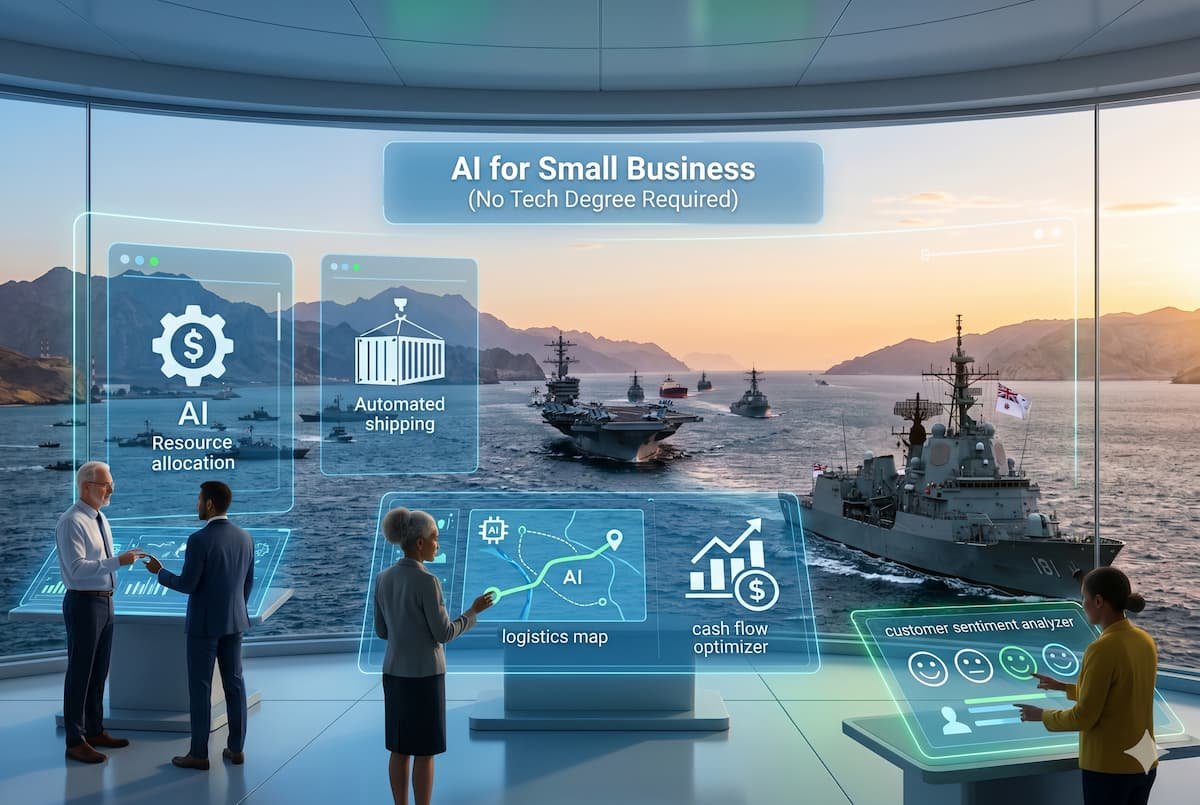
If you’re a small business owner sitting on the fence about AI in 2026, this one’s for you. Here’s what I’ve learned works, what doesn’t, and how to actually get started without it becoming a whole project in itself.
First, Let’s Be Honest About What AI Is and Isn’t
Before diving into the practical stuff, I think it’s worth being real about something. AI is a tool. A genuinely useful one. But it’s not a replacement for knowing your business, your customers, or your craft. The small business owners I’ve seen struggle with AI are usually the ones who expected it to think for them. The ones who are thriving are using it to do more with the time they already have.
That framing matters. Because if you go in expecting a magic fix, you’ll be disappointed. If you go in expecting a really capable assistant that works quickly, doesn’t take lunch breaks, and never complains about doing the same task twice, you’ll probably be impressed.
Writing and Content: The Most Obvious Win
I’ll start here because it’s where most small business owners get the most immediate value, and it’s where I started too.
Think about how much writing your business requires in a given week. Emails to clients. Social media posts. Product descriptions. Blog articles. Responses to reviews. Quotes. Follow-up messages. Newsletter content. Most small business owners I know either spend too long on all of this or just let it pile up.
AI writing tools like ChatGPT, Claude, Jasper and others have gotten genuinely good at producing first drafts quickly. And I want to stress the word “first.” You still need to read it, tweak the tone, make sure it sounds like you, and check the facts. But having a solid draft in two minutes instead of staring at a blank page for forty minutes? That alone is worth a lot.
I used to spend a good chunk of each week on client emails and content. Now I use AI to draft the scaffolding and I just reshape it into my voice. I’d estimate I’ve more than halved the time I spend on routine writing tasks. It doesn’t feel like cheating anymore. It feels like finally having proper tools.
For small business owners in retail, hospitality or trades, this applies just as much. Writing a menu description, a product listing, a quote follow-up, a response to a negative Google review. All of that is faster with AI in your corner.
Customer Service Without Burning Out
If you’ve ever been a one-person or two-person operation, you’ll know that customer queries don’t stop at 5pm. Someone messages you on Saturday night about their order. Someone emails at 6am wanting a quote. And you either answer it immediately or it sits there making you feel guilty until Monday.
AI can help here in a couple of ways. At the simpler end, you can use AI to draft templated responses to common questions that you then personalise. At the more advanced end, some businesses are now using AI chatbots on their websites or social media to handle basic queries automatically.
The Australian Small Business and Family Enterprise Ombudsman, which publishes genuinely useful small business guidance at asbfeo.gov.au, has highlighted digital tools including AI as a growing area of small business capability support, particularly for time-poor operators trying to keep up with customer communication.
For a lot of small businesses, the sweet spot right now isn’t a full chatbot setup. It’s using AI to write faster, cleaner, more professional responses to the messages you’re already getting. That takes a bit of setup but saves a surprising amount of mental energy once it becomes habit.
Admin and Operations: The Stuff Nobody Talks About
This is the area I think gets underestimated the most. When people talk about AI for small business, they usually talk about marketing. But the admin load of running a small business is genuinely where a lot of hours go, and it’s often the most draining.
AI can help with writing and summarising meeting notes, drafting contracts or standard operating procedures from a rough brief, creating checklists and workflows for new processes, summarising long documents or email threads, and building template spreadsheets or tracking systems.
I had a client who ran a small cleaning business. She spent ages every week writing up job sheets, updating her roster, and sending reminders to clients. Once she started using AI to automate her template documents and draft her weekly communications, she told me she got back what felt like a full day each week. She used that time to take on two new regular clients. That’s not a technology story. That’s a business growth story.
Marketing Without a Marketing Team
Most small business owners don’t have a marketing budget that stretches to an agency or a full-time hire. So they either do it themselves badly, don’t do it at all, or pay for something they’re not sure is working.
AI has changed this more than almost anything else in the last couple of years.
For social media, tools like Buffer, Hootsuite and others now integrate AI to help generate post ideas, captions and content calendars. For a tradie, a café owner, or a boutique retailer, having a week’s worth of social content drafted and scheduled on a Sunday afternoon is genuinely achievable now. A year ago, that would have taken either a lot of your own time or money you probably didn’t have.
For email marketing, platforms like Mailchimp and Klaviyo have built AI directly into their tools to help with subject lines, content suggestions and send-time optimisation. You don’t need to understand how any of it works under the hood. You just need to know what you want to communicate.
And for something like Google Ads or Meta advertising, AI-assisted targeting and creative suggestions have made it much more accessible for businesses running their own campaigns without specialist knowledge. The tools are still not perfect, and I’d always recommend learning the basics before trusting AI to run your ad spend completely. But the floor of what a non-expert can do has risen considerably.
Bookkeeping and Financial Visibility
I want to be careful here because financial decisions need human judgment and professional advice. AI is not a replacement for your accountant. Full stop.
But AI-assisted bookkeeping tools have made keeping track of your numbers genuinely less painful. Platforms like Xero, MYOB and QuickBooks now use AI to help categorise transactions, flag anomalies, and give you a clearer picture of your cash flow without needing a finance degree.
What I’ve found useful personally is using AI tools to help me understand financial documents I’d otherwise find impenetrable. Upload a report, ask it to explain what the numbers mean in plain English, and suddenly you’re having a much more productive conversation with your accountant because you actually understand what you’re talking about.
For small business owners who’ve been doing bookkeeping in spreadsheets and avoiding their numbers because they find it stressful, this is probably the category with the most untapped value.
Hiring and HR Without the Headache
Anyone who’s tried to hire someone as a small business owner knows it’s its own part-time job. Writing the job ad, sorting through applications, organising interviews, then writing up an offer or employment agreement.
AI can help at almost every stage of this. Writing a job description that actually attracts the right people is something AI handles well. Drafting interview questions tailored to the role, putting together an onboarding checklist for a new employee, or drafting a basic employment letter to then have checked by an HR professional or lawyer before sending.
I’d always recommend having anything employment-related reviewed by someone with proper HR or legal expertise before it goes out. But AI can do a lot of the heavy lifting on the drafts, which makes the whole process faster and less overwhelming.
Fair Work Australia at fairwork.gov.au remains the best starting point for understanding your obligations as an employer. AI can help you understand what you read there and draft the documents, but the source of truth on employment obligations should always be the official one.
Learning and Staying Current
This one doesn’t get mentioned enough. Running a small business means constantly having to learn things outside your core skill set. Tax changes. New regulations. Marketing trends. Technology updates. It never ends.
AI has become genuinely useful as a research and learning tool. Not a replacement for proper professional advice, but as a way to quickly get up to speed on a topic before you have that professional conversation. Understanding what GST applies to a new service you’re offering, getting a plain-English summary of a contract clause, or figuring out what questions to ask your accountant about a new expense category.
Think of it as having a very well-read friend you can ask anything at any time. They’ll give you a starting point and some context. Then you go and verify the important stuff with the actual professionals.
Getting Started Without Overwhelm
The single biggest mistake I see small business owners make with AI is trying to implement too much at once. They sign up for five tools in a week, get confused, and give up.
My advice is to pick one problem you have right now and find one AI tool that addresses it. If writing takes too long, start with ChatGPT or Claude and use it to draft emails for a week. If social media is neglected, try a scheduling tool with built-in AI content suggestions. If admin is eating you alive, spend one afternoon using AI to build templates for your most common tasks.
Once one thing becomes habit, add another. AI is most useful when it fits into how you already work rather than demanding you change everything overnight.
Research from various small business associations and digital adoption studies consistently suggests that small business owners who take an incremental approach to adopting new tools get better outcomes than those who try to overhaul everything at once. That tracks with what I’ve seen firsthand.
A Few Things to Watch Out For
Because I think honesty is more useful than cheerleading.
AI makes mistakes. It can confidently produce something that is wrong. For any content that goes out publicly under your name, read it properly before publishing. For anything that has legal, financial or compliance implications, get a human professional to check it.
Data privacy matters. Be careful about what information you put into AI tools, particularly any identifying details about clients or customers. Read the privacy policies of tools you use regularly, especially if you’re handling sensitive customer data.
And honestly, don’t let AI strip your personality out of your business communication. The reason customers choose small businesses is often precisely because they feel personal and human. AI-generated content that sounds like it came from a corporate template can work against that. Use AI to move faster, then put yourself back into what it produces.
The tools available to small business owners in 2026 are genuinely remarkable compared to even two or three years ago. The barrier to using them is lower than most people think. The time savings are real. And the businesses that figure this out are quietly getting ahead of the ones that are still doing everything manually and wondering why they’re always behind.

WebFix Business Blog
Latest posts by WebFix Business Blog (see all)
- The Australian Ecommerce Starter Guide to Buying From China - May 28, 2026
- How AI Can Actually Help Small Business Owners in 2026 (No Tech Degree Required) - April 25, 2026
- Essential Online Safety Tips for LGBTQ+ Individuals - June 24, 2025